Algorithmic trading and computational finance, taught the way it is practised
The Institute publishes self-paced courses and credential programs in quantitative trading, market microstructure, portfolio construction and risk. The curriculum is set by the founding faculty, who teach these subjects at university level and have built trading and risk systems in industry. Every assessed course ends in a certificate.
A course catalog built as a ladder
50 courses, from free primers of two or three hours to researcher courses of up to forty. Each one states its hours, its prerequisites and exactly what you will be able to do when you finish.
Certificates that require work
Paid courses end in graded work marked by faculty: a problem set at Foundation, a project at Practitioner, a written assessment at Researcher. A pass earns a certificate with a verification code an employer can check with the Institute.
Credential programs for the whole specialty
Eleven programs combine four to nine courses, most with a capstone, from the Certificate in Algorithmic Trading to the Fellowship in Computational Finance.
Five levels, one direction of travel
Start where your mathematics and code already are. Each level assumes the one below it, and every course page says which courses come first.
- Open Free primers. Read, watch and work the exercises before you spend anything.
- Foundation Short courses that fix the mathematics, statistics and code every later course assumes.
- Practitioner Lab-based courses. You build, test and cost real strategies and systems on market data.
- Researcher Proof-level courses. Stochastic models, estimation theory and the literature behind each method.
- Credential program Multi-course programs, most ending in an assessed capstone, that lead to a named Institute credential.
Credential programs
- Foundation Certificate in Computational FinanceThe entry quantitative finance certificate. Four Foundation courses that fix the probability, statistics and Python every later course assumes, and a first look at how trading systems are built.
- Certificate in Algorithmic TradingSix courses and a capstone that take a strategy from idea to a costed, sized and validated system, with performance reported the way a trading desk would read it.
- Certificate in High-Frequency Trading and Market MicrostructureFive courses and a capstone on how orders meet: the limit order book, execution algorithms, venue routing, market making and the systems that run them.
- Certificate in Statistical ArbitrageFive courses and a capstone on market-neutral trading: time series foundations, pairs and baskets, cointegration and the validation that keeps spread strategies honest.
- Certificate in Systematic InvestingSix courses and a capstone on rule-based investing over months and years: asset pricing, trend following, factors and the portfolio construction that holds them together.
- Certificate in Quantitative Portfolio ManagementSix courses and a capstone on building portfolios with numbers: mean-variance and its failures, robust optimisation, Black-Litterman views, factors, attribution and risk.
- Certificate in Quantitative Risk ManagementA financial risk management certification in five courses and a capstone on measuring and governing market risk: VaR and expected shortfall, volatility models, stress tests and the validation of the models themselves.
- Certificate in Derivatives PricingDerivative pricing in five courses and a capstone, from stochastic calculus to stochastic volatility: how options are priced, hedged and calibrated to the market.
- Certificate in Machine Learning for TradingFive courses and a capstone on applying machine learning to markets without fooling yourself: labelling, features, purged validation, overfitting tests and reinforcement learning.
- Professional Diploma in Algorithmic TradingThe top credential on the practitioner path. Eight courses and a 40-hour capstone covering everything between a trading idea and a book you could defend to a risk committee.
- Fellowship in Computational FinanceThe top credential on the researcher path. Nine courses, eight of them at researcher level, and a supervised dissertation, examined by two faculty members.
Start free
- AI Trading: What Works and What Does Not A sober introduction to artificial intelligence in trading: where machine learning is used by professional firms, why most AI trading claims fail on inspection, the specific traps of financial data, and how to judge a strategy or product that says it uses AI.
- Algorithmic Trading: An Open Introduction What is algo trading? A plain account of what an algorithm decides, the main families of strategy, the costs that eat returns, and what it takes to test an idea honestly.
- High-Frequency Trading Explained What is high-frequency trading? A plain account of what HFT firms do, how market making and arbitrage earn small amounts many times a day, why speed matters, and what the evidence says about its effect on markets.
- Introduction to Quantitative Finance What is quantitative finance? A free primer on what the field is, what quants actually do in banks, funds and trading firms, and what you need to learn to join them.
- Monte Carlo Simulation, From First Principles What is a Monte Carlo simulation? A free course that builds one from first principles: random numbers, the law of large numbers, simulated price paths and their error bars.
Why most trading education fails, and what is done differently here
These are the complaints practitioners make most often about trading courses. The catalog is organised around answering them.
| The common failure | What the Institute does about it |
|---|---|
| Backtests that look excellent and fail in live trading. | Every practitioner lab course ends in an out-of-sample assessed project, and backtest validation has a course of its own. |
| Strategies taught without slippage, spreads or market impact. | Execution and microstructure are a full track, and transaction costs are charged in every strategy lab. |
| One expensive, dated program sold as the only route in. | Credentials are built course by course. You pay for the courses you take and can stop at any certificate. |
| No one to check the work. | Assessed work is marked by faculty. The researcher path ends in a supervised written dissertation. |
Ten specialist tracks
Each track is one specialty of the trade. Its page lists the courses in order of level and the credential programs they count toward.
Quantitative Foundations
The mathematical finance every later course assumes: probability, statistics, linear algebra, time series and stochastic calculus, taught with market data rather than textbook urns.
10 courses publishedProgramming for Quantitative Finance
Python for trading research and backtesting, C++ for systems where microseconds matter. Code you can run, review and put into production.
4 courses publishedAlgorithmic Trading
Strategy design, backtesting, position sizing and performance measurement, from the first rule-based system to a costed, validated strategy.
8 courses publishedHigh-Frequency Trading and Market Microstructure
High-frequency trading (HFT) courses on how orders meet: limit order books, execution algorithms, smart order routing and the economics of trading at microsecond scale.
5 courses publishedStatistical Arbitrage and Medium-Frequency Trading
Mean reversion trading over hours to weeks: pairs, baskets, cointegration and the risk of spreads that stop converging.
3 courses publishedSystematic Investing
Systematic trading over months and years: factors, trend following and the evidence behind them.
4 courses publishedPortfolio Management
From mean-variance theory to optimisers that survive estimation error: how quantitative portfolios are constructed and rebalanced.
3 courses publishedFinancial Risk Management
Financial risk management in practice: measuring, testing and governing market risk with VaR, expected shortfall, stress tests and the controls around the models themselves.
5 courses publishedDerivatives and Rates
Option pricing from Black-Scholes to stochastic volatility, with the hedging and calibration that make the models useful.
4 courses publishedMachine Learning for Finance
Machine learning in finance, applied with the controls that markets demand: purged validation, leakage checks and honest costs.
4 courses published
How a certificate is earned
Certificates are earned, not attended. The rules are the same for every paid course.
Enrol and confirm
Add courses to your enrolment list and confirm by email. You receive an invoice; access opens within 72 hours of payment.
Study at your own pace
Lessons, readings, code notebooks and graded exercises. Access does not expire.
Submit the assessment
A project on market data for practitioner courses, a written paper-style examination for researcher courses.
Receive the certificate
Faculty mark the work. A pass earns a named certificate with a verification code.
The founding faculty
Founded by three Carnegie Mellon University faculty members. The Institute has hosted a practicum for Carnegie Mellon University students.
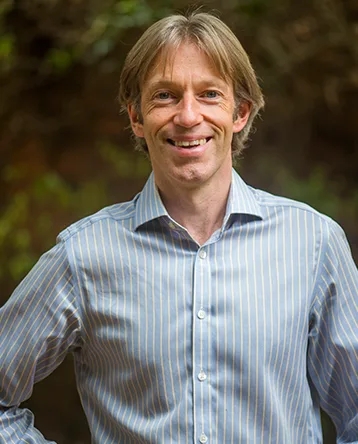
Prof. Patrick McSharry
Research Professor
Research professor at Carnegie Mellon University Africa. Twenty-two years at Oxford, affiliated with the Oxford-Man Institute of Quantitative Finance. Forecasting, machine learning and risk.

Prof. Martin Saint
Distinguished Service Professor
Carnegie Mellon University Africa faculty from 2013 to 2023. Former stockbroker; taught the first academic fintech and blockchain courses on the African continent.
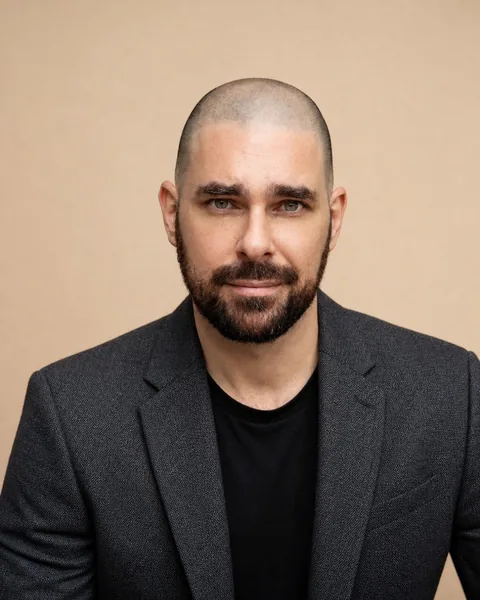
Prof. Ben Racz
Professor of the Practice
Professor of the Practice at Carnegie Mellon University's College of Engineering, teaching Advanced Quantitative Finance and Algorithmic Trading. Founder of Algorithmic Sciences.
Choose a first course
Free Open courses need nothing but an email address. Paid courses are invoiced after you confirm, and access opens within 72 hours of payment. Admissions answers questions about prerequisites and credential planning.
- Courses and admissions
- [email protected]
- Certificates and verification
- [email protected]
- Research and teaching partnerships
- [email protected]