Skip to content
In academic affiliation with Carnegie Mellon University
Institute of Algorithmic Tradingand Applied Computational Finance

Who sets the curriculum

Faculty

The Institute was founded by three Carnegie Mellon University faculty members. Between them they cover forecasting and risk, financial technology and market structure, and the design and validation of trading systems.

Portrait of Prof. Patrick McSharry

Prof. Patrick McSharry

Research Professor

Patrick McSharry is a research professor at Carnegie Mellon University Africa and director of the African Centre of Excellence in Data Science in Rwanda, funded by the World Bank. He is a member of the Kigali Collaborative Research Centre.

He spent twenty-two years at the University of Oxford and remains affiliated with the Oxford-Man Institute of Quantitative Finance, the Mathematical Institute, the Department of Computer Science and the Oxford Internet Institute.

His research develops quantitative methods for data science, forecasting, predictive analytics, machine learning, decision-making and risk management. He has published more than 100 peer-reviewed papers and three books, and advises government agencies and firms in insurance, finance, energy, telecommunications, agriculture, education and healthcare.

He is a Fellow of the Royal Statistical Society, a Senior Member of the IEEE and a Senior Academic Member of the Willis Research Network. He has held a Royal Academy of Engineering Research Fellowship and two Marie Curie Research Fellowships, in the United Kingdom and in Spain.

Teaches at the Institute: Forecasting, machine learning for finance and quantitative risk.

Portrait of Prof. Martin Saint

Prof. Martin Saint

Distinguished Service Professor

Martin Saint is a professor, researcher and engineer with more than forty years of experience in the private and public sectors. From 2013 to 2023 he taught and researched at Carnegie Mellon University’s Africa campus, working on complex systems with a focus on financial trading, engineering and emerging technologies.

He is a former stockbroker. At Carnegie Mellon University Africa he introduced the first academic courses in financial technology and blockchain on the African continent.

He consults on engineering, economics, financial technology, computational finance, business and policy for public and private organisations. He is an invited lecturer at the International Centre for Theoretical Physics in Italy, a research fellow at the Kigali Collaborative Research Centre, and an advisor to two World Bank-funded African Centres of Excellence, in the Internet of Things and in data science.

His earlier research was carried out at the University of Colorado’s Pervasive Communications Laboratory and Digital Energy Lab, with contributions to the Emergency Management Institute of the U.S. Federal Emergency Management Agency and to Idaho National Laboratory. He holds an MS and a PhD from the University of Colorado’s Technology, Cybersecurity and Policy program.

Teaches at the Institute: Market structure, financial technology and the economics of trading systems.

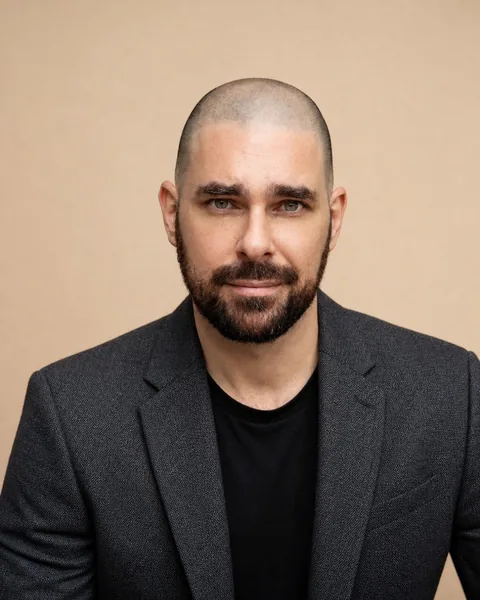
Portrait of Prof. Ben Racz

Prof. Ben Racz

Professor of the Practice

Ben Racz holds the academic title of Professor of the Practice at the College of Engineering at Carnegie Mellon University, where he teaches Advanced Quantitative Finance and Algorithmic Trading to master’s students.

He is the founder and managing director of Algorithmic Sciences, a research and consulting firm, where he is also Head of Quantitative Analysis. The firm develops institutional validation procedures and systems for building and executing portfolios of intraday trading strategies, using statistical analysis and robustness testing.

He has managed complex software projects since 2001. His specialities are the validation of manual, semi-automated and automated trading strategies, distributed research infrastructure, execution and order-management systems, and risk management and monitoring systems.

Before Algorithmic Sciences he co-founded a data-driven business consultancy, a data-science-based wholesale trading company, and an information security consultancy whose work covered security auditing, ISO 27001 auditing and policy, Sarbanes-Oxley compliant infrastructure operations and PCI-DSS vulnerability testing for multinational corporations.

Teaches at the Institute: Algorithmic trading, strategy validation, execution and trading infrastructure.

How the faculty work with the Institute

The founding faculty set the curriculum: which courses exist, what each one must teach and how it is assessed. Assessed projects and examinations are marked against criteria they approve.

Teaching or research partnership enquiries go to the partnerships office, listed on the contact page.